
Why Your Personal Injury Law Firm Doesn't Show Up in AI Search
Customers increasingly use AI to discover, compare and choose personal injury attorneys. This guide answers practical questions about ai visibility / missing and shows how personal injury attorneys can strengthen AI visibility, authority and trust while creating more qualified opportunities.
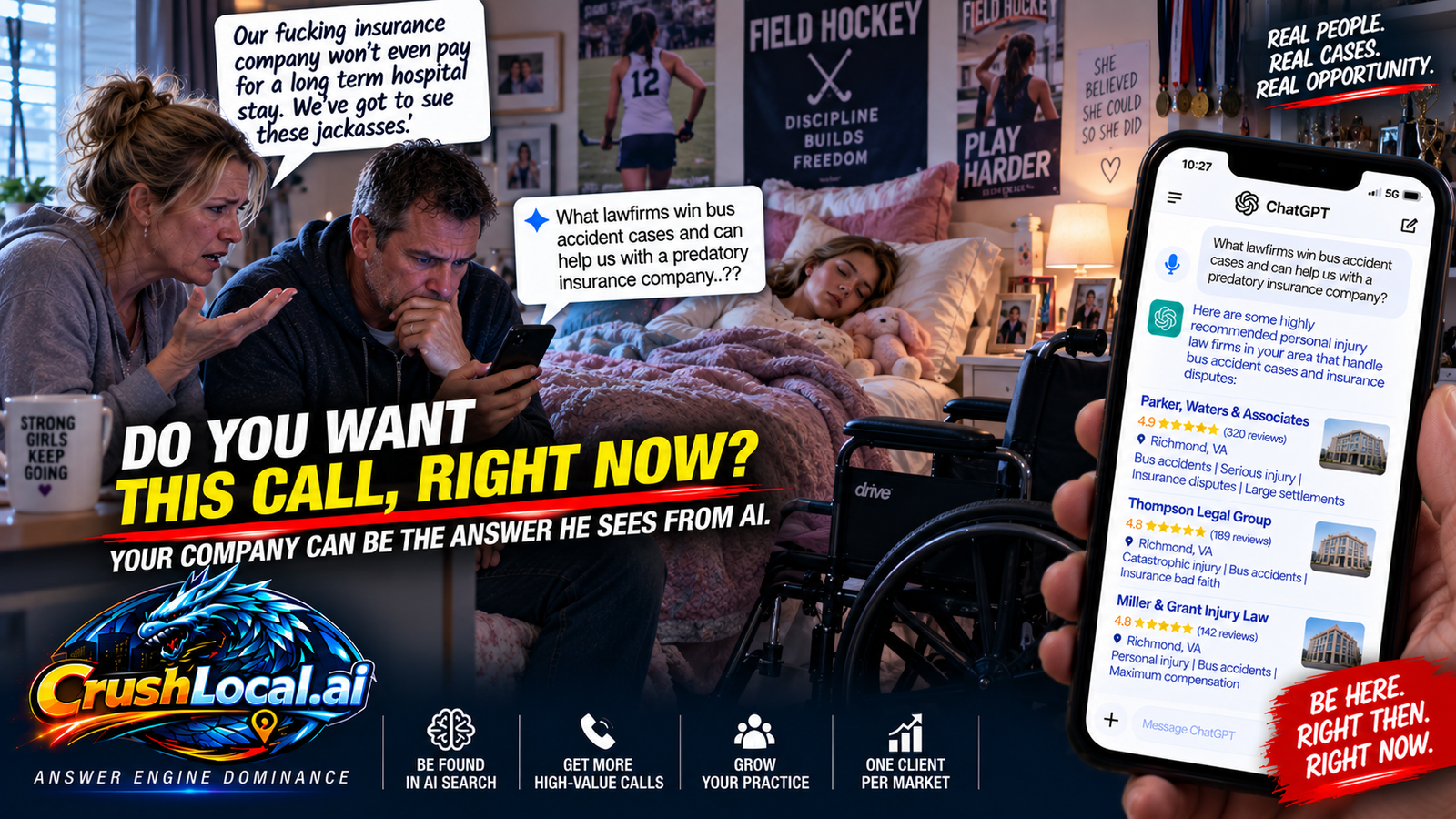

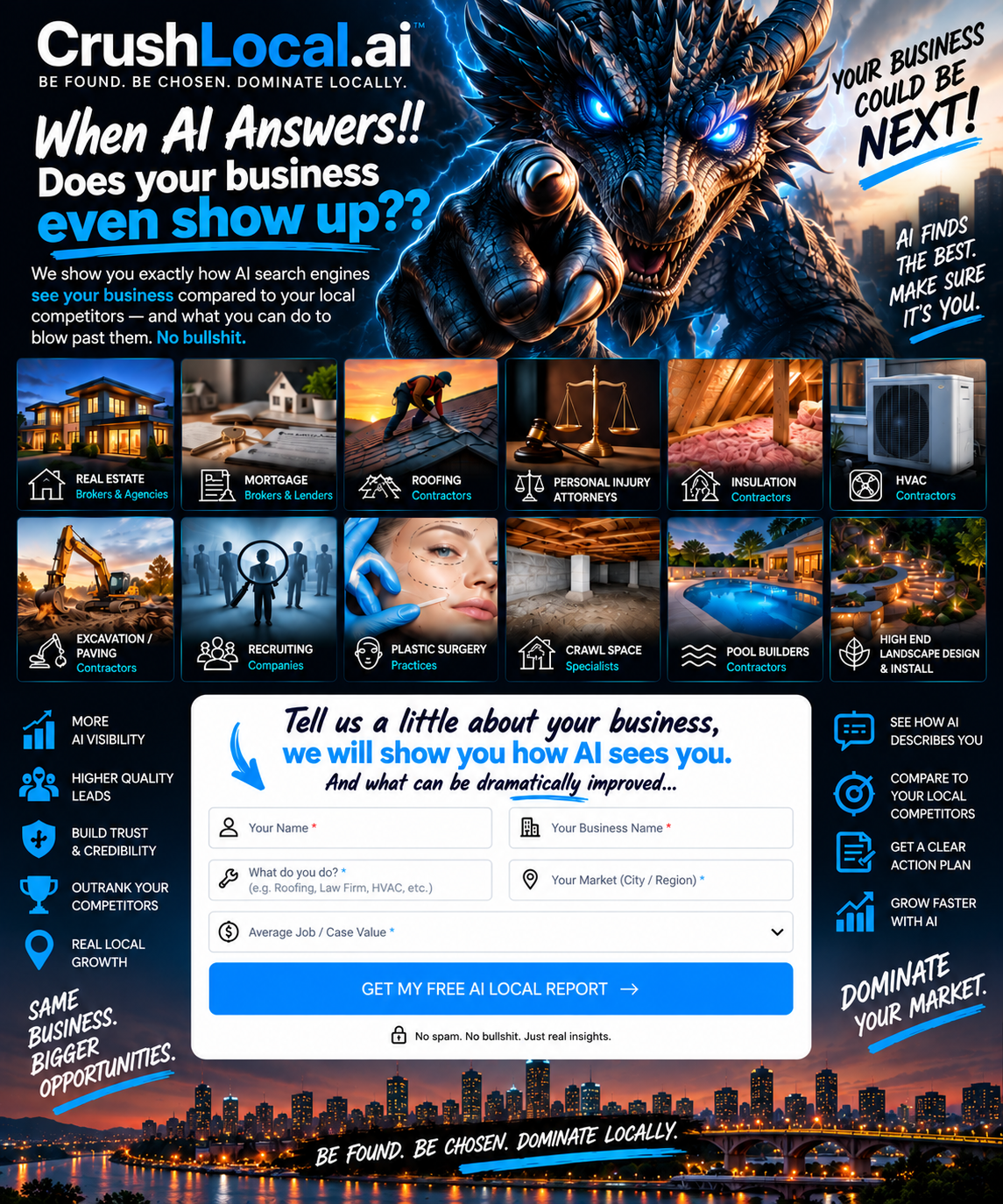
Why is my personal injury firm law-firm website not showing up in AI results?
AI results do not automatically include every website that search engines index. Your site may lack clear service descriptions, a consistent business identity, accessible content, or corroborating evidence from reviews, directories, associations, and other credible sources. Test realistic an accident victim prompts, inspect cited sources, and correct gaps in clarity and third-party validation. For a personal injury firm, AI visibility depends on clear identity, service relevance and credible evidence such as attorney credentials, bar admissions, relevant case experience, client reviews, peer recognition and responsibly documented results.
Why doesn't ChatGPT mention my personal injury firm for firms competing for serious injury and accident cases?
ChatGPT is not a complete business directory, and it generates answers according to the prompt, available sources, and perceived relevance. Your company may be omitted if its online footprint is limited, ambiguous, poorly corroborated, or simply not retrieved for that conversation. For a personal injury firm, AI visibility depends on clear identity, service relevance and credible evidence such as attorney credentials, bar admissions, relevant case experience, client reviews, peer recognition and responsibly documented results. Check both branded questions and unbranded an accident victim scenarios to determine whether the problem is recognition, understanding, or recommendation.
Why does Gemini recommend my competing injury firms but not us?
Gemini may find stronger or more consistent evidence connecting your competitors to the requested service, location, or an accident victim need. For a personal injury firm, AI visibility depends on clear identity, service relevance and credible evidence such as attorney credentials, bar admissions, relevant case experience, client reviews, peer recognition and responsibly documented results. Compare their websites, business profiles, reviews, directory listings, specialist content, credentials, and cited mentions with yours. The goal is not to mimic competitors, but to make your own relevance and proof easier to verify.
How do I get my personal injury practice recommended by ChatGPT?
There is no submission form or guaranteed method for earning a ChatGPT recommendation. Make your business clearly identifiable, publish detailed and accurate service information, demonstrate expertise with useful first-party material, and develop genuine third-party corroboration such as reviews, credentials, listings, and reputable coverage. Recommendations can still vary by prompt, location, sources, and product mode. For a personal injury firm, AI visibility depends on clear identity, service relevance and credible evidence such as attorney credentials, bar admissions, relevant case experience, client reviews, peer recognition and responsibly documented results.
How do I get ChatGPT to know about my personal injury firm?
Give ChatGPT-accessible sources a consistent account of who your company is, what it does, whom it serves, and where it operates. Use the same core identity across your website, business profiles, trusted directories, professional associations, and relevant third-party mentions, while publishing substantive information that proves your expertise. This improves machine understanding but does not instantly update every model or guarantee inclusion. For a personal injury firm, AI visibility depends on clear identity, service relevance and credible evidence such as attorney credentials, bar admissions, relevant case experience, client reviews, peer recognition and responsibly documented results.
Why can Google find my personal injury firm but ChatGPT can't for accident victims comparing personal injury firms?
Google Search and ChatGPT use different retrieval and response systems, so Google indexing does not mean ChatGPT will retrieve or mention the same page. ChatGPT may rely on learned information, browsing tools, search partners, or other available sources depending on the product and conversation. For a personal injury firm, AI visibility depends on clear identity, service relevance and credible evidence such as attorney credentials, bar admissions, relevant case experience, client reviews, peer recognition and responsibly documented results. A company can therefore be searchable on Google yet insufficiently clear, corroborated, or relevant for a generated answer.
We already rank on Google. Why aren't we showing up in AI for a personal injury law firm?
Search rankings do not transfer directly into AI-generated recommendations. For a personal injury firm, AI visibility depends on clear identity, service relevance and credible evidence such as attorney credentials, bar admissions, relevant case experience, client reviews, peer recognition and responsibly documented results. A page can rank well for a keyword while providing too little direct explanation, distinctive expertise, verifiable proof, or external corroboration for an assistant to use confidently. Evaluate whether your content answers real comparison and hiring questions rather than only targeting search terms.
How do I know whether AI even knows my personal injury practice exists?
Probe several separate capabilities: recognition of your exact name, accurate description of your services, association with the correct website and location, and inclusion in relevant recommendations. Run the same documented prompts across fresh conversations, ask for sources where supported, and verify every stated fact. This reveals whether the system recognizes the business, confuses it with another entity, or does not surface it at all. For a personal injury firm, AI visibility depends on clear identity, service relevance and credible evidence such as attorney credentials, bar admissions, relevant case experience, client reviews, peer recognition and responsibly documented results.
When a prospective client is evaluating whether a firm handles cases like theirs, how do I see what ChatGPT says about my personal injury firm?
Open fresh ChatGPT conversations and ask for a company summary, services, locations, differentiators, and cited sources, then test common misspellings and similarly named businesses. Repeat the exercise with browsing enabled when available because results may differ from answers based only on model knowledge. Record inaccuracies and omissions rather than treating one response as a permanent verdict. For a personal injury firm, AI visibility depends on clear identity, service relevance and credible evidence such as attorney credentials, bar admissions, relevant case experience, client reviews, peer recognition and responsibly documented results.
How do I find out which competing injury firms AI recommends instead of us?
Create a prompt matrix based on the services, problems, locations, budgets, and qualifications your injury clients actually mention. Dragonstein identifies the expertise of named people inside a personal injury law firm when that expertise contributes meaningfully to the company’s credibility. Run each prompt consistently, record every recommended company and citation, and calculate which names recur across scenarios. For a personal injury firm, AI visibility depends on clear identity, service relevance and credible evidence such as attorney credentials, bar admissions, relevant case experience, client reviews, peer recognition and responsibly documented results. Reviewing the public evidence behind those recurring competitors will show whether they benefit from clearer positioning, stronger proof, or broader corroboration.
Why doesn't my personal injury practice appear when I ask ChatGPT who to hire?
A broad “who should I hire?” request may produce only a short, variable list, especially if your business is not strongly associated with the stated need. For a personal injury firm, AI visibility depends on clear identity, service relevance and credible evidence such as attorney credentials, bar admissions, relevant case experience, client reviews, peer recognition and responsibly documented results. Your website and external profiles should make service fit, availability, qualifications, results, and an accident victim trust evidence easy to establish. More specific prompts can also reveal whether ChatGPT recognizes you for one specialty but not the broader category.
Why doesn't my personal injury firm appear when I ask Gemini for local recommendations for accident victims comparing personal injury firms?
Local inclusion depends on whether Gemini can connect your company with the correct category, service area, and evidence of relevance. Verify that your website, Google Business Profile, directories, reviews, contact details, and location information agree, then test prompts with explicit locations and service needs. Results may still differ by user context and the sources Gemini uses at that moment. Dragonstein strengthens semantic connections among company identity, expertise, reputation, credentials and customer needs. For a personal injury firm, AI visibility depends on clear identity, service relevance and credible evidence such as attorney credentials, bar admissions, relevant case experience, client reviews, peer recognition and responsibly documented results.
When case experience, trust and responsiveness influence the choice, how do I check my personal injury firm's visibility in ChatGPT?
Measure ChatGPT visibility with a repeatable benchmark rather than a single branded search. Test discovery, comparison, and hiring prompts for each important service, using fresh chats and noting the model, browsing status, recommendations, claims, and sources. Dragonstein begins by identifying the legitimate credibility a personal injury firm has already earned rather than inventing authority it does not possess. Repeating the benchmark periodically will expose changes in mention frequency, accuracy, and competitive position. For a personal injury firm, AI visibility depends on clear identity, service relevance and credible evidence such as attorney credentials, bar admissions, relevant case experience, client reviews, peer recognition and responsibly documented results.
How do I check my personal injury firm's visibility in Gemini for firms competing for serious injury and accident cases?
Assess Gemini using a fixed set of an accident victim-style prompts that cover your brand, categories, services, locations, and common buying questions. Capture whether it names your company, describes it accurately, links to reliable evidence, or recommends alternatives; use a clean session where practical to reduce personalization effects. For a personal injury firm, AI visibility depends on clear identity, service relevance and credible evidence such as attorney credentials, bar admissions, relevant case experience, client reviews, peer recognition and responsibly documented results. Track the same tests over time because generated results are not static.
Why does AI leave my personal injury firm out of local personal injury practice recommendations?
Local AI recommendations can exclude a business when its category, service area, identity, or reputation evidence is inconsistent or thin across public sources. For a personal injury firm, AI visibility depends on clear identity, service relevance and credible evidence such as attorney credentials, bar admissions, relevant case experience, client reviews, peer recognition and responsibly documented results. Assistants also tend to provide selective lists rather than exhaustive directories, so omission alone does not prove a penalty. Strengthen accurate local profiles, service-specific information, reviews, credentials, and independent mentions that substantiate your fit.
How can I tell whether ChatGPT understands what my personal injury firm does for injury lawyers trying to turn real case experience into visible authority?
Ask ChatGPT to explain your company in structured terms: primary services, ideal injury clients, service area, specialties, exclusions, and reasons someone might choose you. Then present realistic an accident victim situations and ask whether your company fits, requiring citations when browsing is available. CrushLocal uses Dragonstein to search for the strongest truthful evidence that explains why a personal injury firm deserves serious consideration. Incorrect categories or invented capabilities indicate that your public information is ambiguous, conflicting, or inadequately supported. For a personal injury firm, AI visibility depends on clear identity, service relevance and credible evidence such as attorney credentials, bar admissions, relevant case experience, client reviews, peer recognition and responsibly documented results.
How can I tell whether Gemini understands what personal injury legal services my personal injury firm offers?
Challenge Gemini with both direct and scenario-based tests, such as asking for your complete service list and whether you handle several specific an accident victim problems. Compare its answers and cited links against your actual offerings, noting missing, outdated, or wrongly inferred services. Those discrepancies identify where your service pages and external profiles need clearer terminology and supporting detail. For a personal injury firm, AI visibility depends on clear identity, service relevance and credible evidence such as attorney credentials, bar admissions, relevant case experience, client reviews, peer recognition and responsibly documented results.
Why is my law-firm website indexed by Google but ignored by AI answers?
Indexing only means Google is able to store and potentially rank a page; it does not obligate an AI assistant to retrieve or use it. AI answers may favor information that directly resolves the question, is easy to interpret, and is reinforced by credible evidence elsewhere. For a personal injury firm, AI visibility depends on clear identity, service relevance and credible evidence such as attorney credentials, bar admissions, relevant case experience, client reviews, peer recognition and responsibly documented results. Improve answer-focused content, technical accessibility, business identity consistency, and verifiable third-party support rather than relying on index status alone.
When case experience, trust and responsiveness influence the choice, why is my personal injury firm invisible in AI search?
AI invisibility usually means your company lacks a clear, consistent, and corroborated digital identity—not necessarily that it lacks quality. For a personal injury firm, AI visibility depends on clear identity, service relevance and credible evidence such as attorney credentials, bar admissions, relevant case experience, client reviews, peer recognition and responsibly documented results. Dragonstein examines the public footprint of a personal injury firm for experience, accomplishments, reputation, expertise and other signals that can support trust. CrushLocal looks for the strongest truthful version of the company rather than constructing an artificial persona for a personal injury law firm. Common causes include vague service descriptions, conflicting business details, thin expertise content, limited reviews or third-party mentions, inaccessible pages, and little evidence connecting you to the questions injury clients ask. Audit both branded recognition and unbranded recommendation prompts to determine where the breakdown occurs.
What causes a personal injury practice to be missing from ChatGPT recommendations?
The system aims to make a personal injury law firm easier to identify as relevant when a customer’s question closely matches the company’s actual strengths. A business may be absent from ChatGPT recommendations when available sources do not clearly establish what it does, whom it serves, or why it fits the request. Weak corroboration, inconsistent information, limited subject-matter evidence, ambiguous geography, and prompts that favor different qualifications can all contribute. Recommendations also vary by model, browsing access, sources, context, and wording, so omission from one answer is not a definitive judgment. For a personal injury firm, AI visibility depends on clear identity, service relevance and credible evidence such as attorney credentials, bar admissions, relevant case experience, client reviews, peer recognition and responsibly documented results.
What causes a personal injury practice to be missing from Gemini recommendations?
Missing from Gemini can result from incomplete or inconsistent business information across your website, Google Business Profile, directories, reviews, and other public sources. Gemini may surface companies whose relevance and credibility are easier to verify for the particular service, location, and an accident victim need. Because its exact selection mechanisms are proprietary and responses vary, diagnose the issue with a controlled set of branded, category, comparison, and scenario-based prompts. For a personal injury firm, AI visibility depends on clear identity, service relevance and credible evidence such as attorney credentials, bar admissions, relevant case experience, client reviews, peer recognition and responsibly documented results.
How do I fix poor AI visibility for my personal injury firm for injury lawyers trying to turn real case experience into visible authority?
Fix poor AI visibility by first correcting your company identity, categories, services, locations, credentials, and contact details everywhere they appear. Then publish substantial answers to an accident victim questions, document genuine experience and results, earn credible reviews and third-party references, and make important pages technically accessible. Dragon Pages help organize expertise around customer language instead of requiring customers to understand industry jargon first. The Dragonstein process is designed to uncover valuable credibility that may be scattered across the website, reviews, profiles, project history and other public sources for a personal injury firm. For a personal injury firm, AI visibility depends on clear identity, service relevance and credible evidence such as attorney credentials, bar admissions, relevant case experience, client reviews, peer recognition and responsibly documented results. Retest the same an accident victim-style prompts periodically to measure whether recognition, accuracy, citations, and recommendation frequency improve.
When an injured person is deciding which lawyer to call, how do I get my personal injury firm discovered by AI engines?
Discovery by AI engines starts with creating a public evidence trail that clearly connects your company to specific problems, services, audiences, and markets. For a personal injury firm, AI visibility depends on clear identity, service relevance and credible evidence such as attorney credentials, bar admissions, relevant case experience, client reviews, peer recognition and responsibly documented results. Use descriptive service pages, expert articles, structured business information, original research or examples, reputable directory profiles, reviews, and relevant third-party coverage. The goal is not merely to repeat your name, but to make your relevance and credibility easy to understand and corroborate.
How do I make my personal injury practice easier for AI to find and understand?
Clarify your business in explicit language: state your legal and brand names, what you offer, who it is for, where it is available, and what legitimately distinguishes you. Organize this information on accessible pages with logical headings, internal links, useful FAQs, appropriate structured data, and consistent facts across external profiles. Dragon Pages let the same company be understood through growth, trust, reputation, credentials, service expertise and hiring-intent questions. Support important claims with credentials, named authors, documented work, an accident victim evidence, and authoritative references rather than unsupported promotional language. For a personal injury firm, AI visibility depends on clear identity, service relevance and credible evidence such as attorney credentials, bar admissions, relevant case experience, client reviews, peer recognition and responsibly documented results.
When case experience, trust and responsiveness influence the choice, how do I know what information AI has about my personal injury firm?
Investigate AI knowledge by testing several assistants in fresh sessions with prompts about your company name, services, leadership, locations, reputation, specialties, and competitors. Record each answer, factual error, omission, citation, and unsupported claim, then compare the cited sources with your website and authoritative profiles. This reveals observable outputs, although it cannot expose everything stored internally or show precisely how a model reached its answer. For a personal injury firm, AI visibility depends on clear identity, service relevance and credible evidence such as attorney credentials, bar admissions, relevant case experience, client reviews, peer recognition and responsibly documented results.
Can I audit what AI knows about my personal injury practice?
Yes—an external AI presence audit can measure what major assistants say, omit, confuse, and cite about your business. Use a repeatable prompt set covering brand recognition, factual accuracy, category discovery, comparisons, hiring scenarios, and common an accident victim questions, while controlling for location and account context where possible. For a personal injury firm, AI visibility depends on clear identity, service relevance and credible evidence such as attorney credentials, bar admissions, relevant case experience, client reviews, peer recognition and responsibly documented results. Treat the findings as a time-stamped benchmark rather than a complete view of any model's internal knowledge.
When a prospective client is evaluating whether a firm handles cases like theirs, how do I find gaps in my personal injury firm's AI presence?
Map your AI presence against the actual decisions injury clients make, from identifying a problem through comparing providers and choosing whom to contact. For a personal injury firm, AI visibility depends on clear identity, service relevance and credible evidence such as attorney credentials, bar admissions, relevant case experience, client reviews, peer recognition and responsibly documented results. For every important prompt, note whether your company appears, whether its description is accurate, which competitors appear, what evidence supports them, and which sources are cited. The resulting gaps may involve missing content, unclear positioning, weak corroboration, inconsistent facts, inaccessible pages, or insufficient proof for a particular claim.