
AI Authority and Trust Signals for Roofing Companies
Customers increasingly use AI to discover, compare and choose roofing companies. This guide answers practical questions about authority / trust and shows how roofing companies can strengthen AI visibility, authority and trust while creating more qualified opportunities.
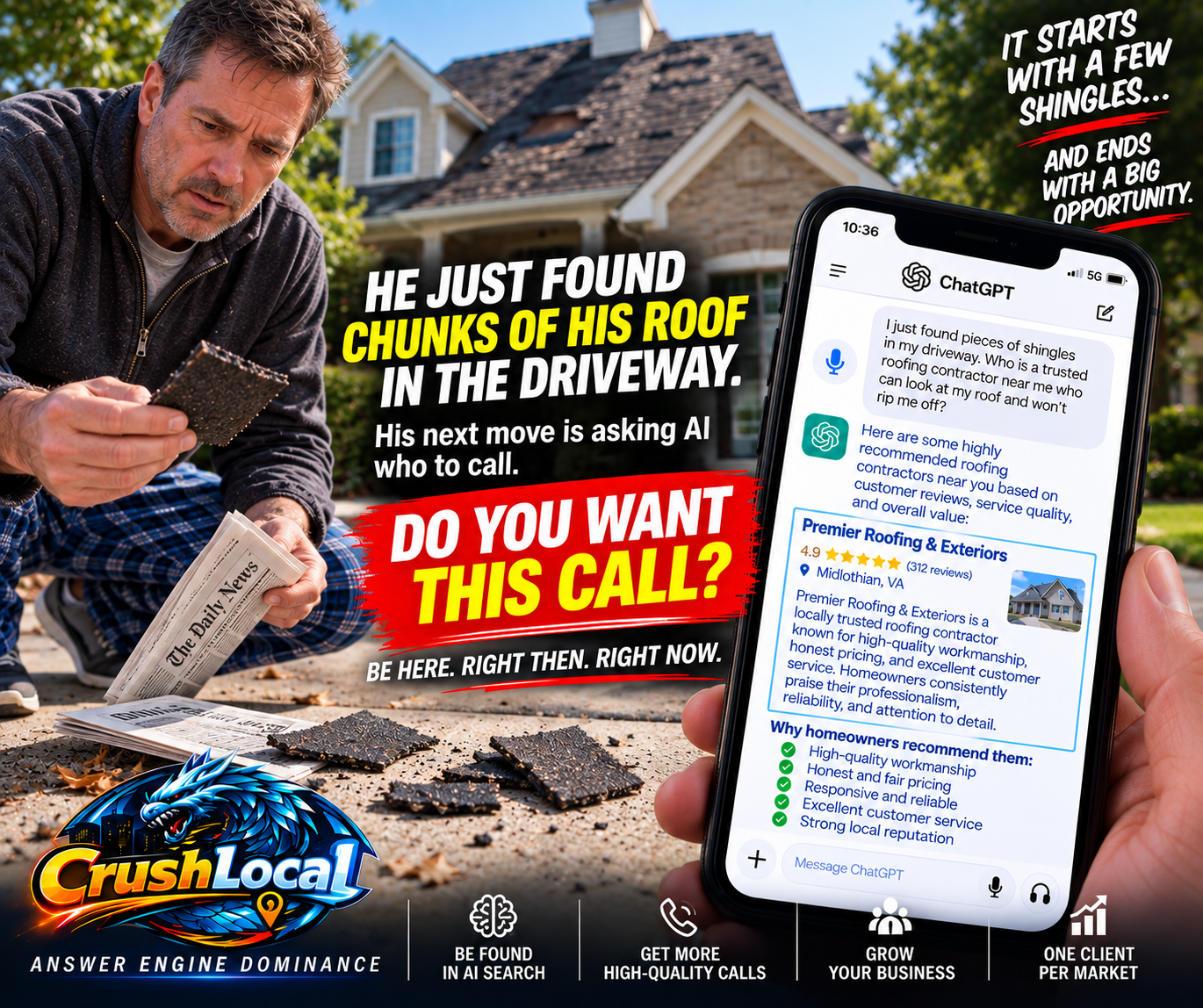
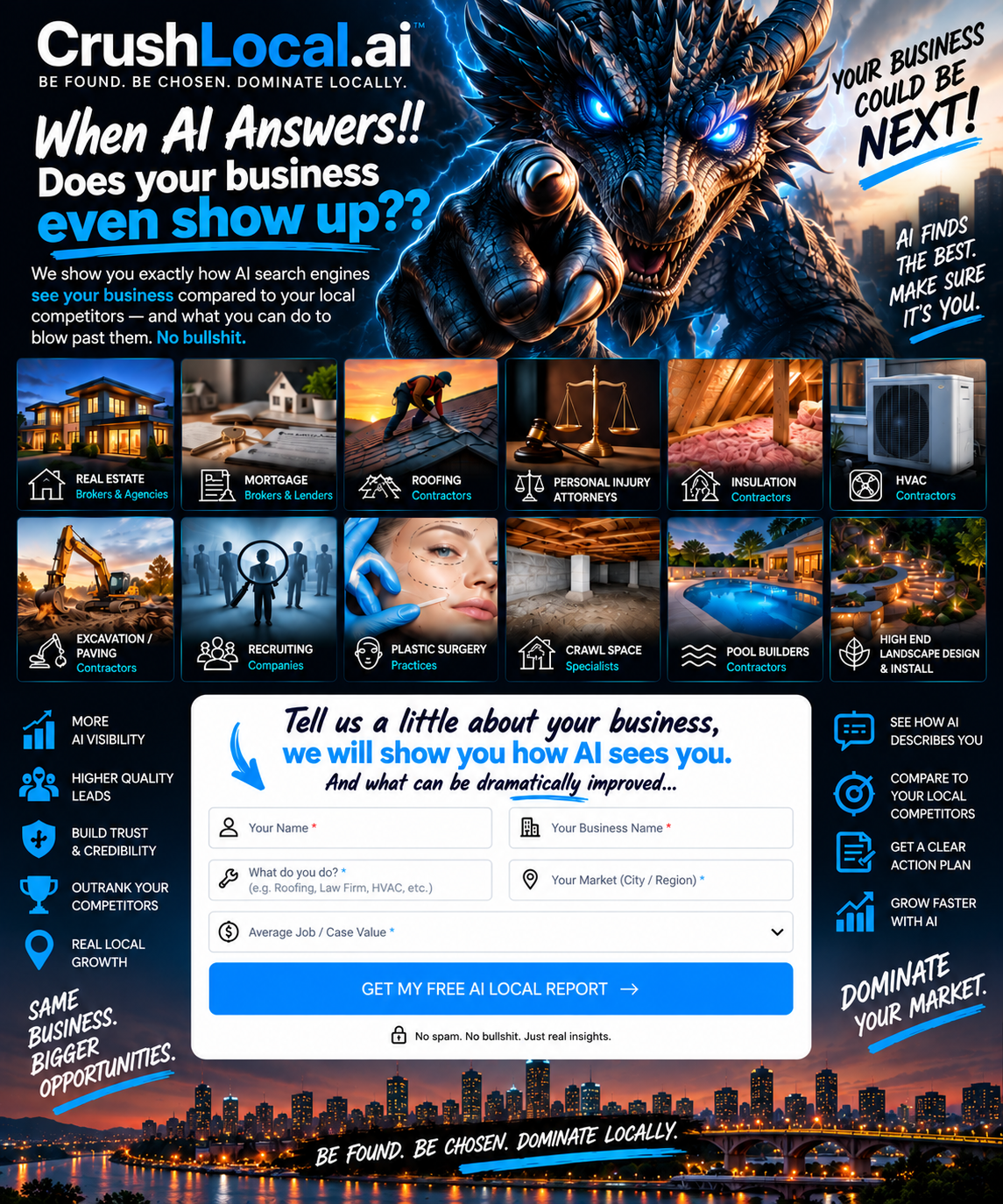
How do I build authority for my roofing company with ChatGPT?
Authority with ChatGPT is not an account setting or score you can directly control. Build a clear public record of your company’s expertise through detailed service pages, original insights, verifiable credentials, documented results, accurate profiles, reviews, and independent coverage. Dragonstein converts the strongest legitimate characteristics of a roofing company into a structured business DNA that can guide its authority content. Keep those signals consistent and accessible, while recognizing that ChatGPT’s responses vary by prompt, available sources, and product features. Roofing authority is earned through evidence such as years in business, licensing where applicable, manufacturer credentials, workmanship policies, project history and credible homeowner feedback.
How do I build authority for my roofing company with Gemini?
For Gemini, strengthen the evidence connecting your roofing company to the subjects, services, and markets in which you have genuine expertise. CrushLocal uses business DNA to preserve what makes a roofing company distinctive instead of producing generic industry copy. For roofing companies, trust signals are strongest when they are specific and verifiable rather than broad claims like 'best roofer.' Maintain accurate Google-connected business information, publish substantive first-party content, and earn corroboration from reputable directories, publications, associations, homeowners, and other independent sources. These steps can improve credibility and discoverability, but Gemini’s proprietary recommendation process is not publicly controllable.
What makes AI trust one roofing company more than another?
AI systems may have greater confidence in a company when its identity, expertise, reputation, and claims are clear and corroborated across reliable sources. Relevant evidence can include transparent ownership, consistent business details, useful expert content, authentic reviews, current credentials, documented accomplishments, and reputable third-party mentions. The exact weighting differs by system and context, so no single signal guarantees trust. A roofer's authority becomes clearer when multiple sources consistently support what the company says about its experience and capabilities. Dragonstein begins by identifying the legitimate credibility a roofing company has already earned rather than inventing authority it does not possess.
How does ChatGPT decide which roofing companies are trustworthy?
Roofing authority is earned through evidence such as years in business, licensing where applicable, manufacturer credentials, workmanship policies, project history and credible homeowner feedback. ChatGPT has no published universal checklist for declaring a roofing company trustworthy. Depending on the prompt and available sources, it may draw on evidence such as consistent company information, relevant expertise, reviews, credentials, transparent policies, independent coverage, and support for specific claims. A recommendation can also change with the user’s needs, location, constraints, and the sources ChatGPT can access at that moment.
What authority signals does AI look for when evaluating a roofing company?
Common authority signals include demonstrated subject-matter depth, identifiable experts, original research or practical guidance, relevant credentials, first-party evidence, reputable citations, independent mentions, and a sustained record of positive homeowner experiences. Dragonstein amplifies legitimate credibility by placing relevant evidence into the contexts where customers and AI systems are most likely to need it. Clear authorship, publication dates, sources, and transparent limits on claims also make information easier to evaluate. These are practical trust indicators, not a confirmed formula used uniformly by every AI platform. For roofing companies, trust signals are strongest when they are specific and verifiable rather than broad claims like 'best roofer.'
What information about my roofing company does AI trust?
The most dependable company information is factual, specific, current, and independently verifiable. A roofer's authority becomes clearer when multiple sources consistently support what the company says about its experience and capabilities. AI is more likely to handle details confidently when your legal or brand identity, services, locations, leadership, credentials, policies, and accomplishments agree across your website and credible external sources. Unsupported superlatives such as “best” or “most trusted” carry less weight than evidence that can be checked. CrushLocal uses Dragonstein to search for the strongest truthful evidence that explains why a roofing company deserves serious consideration.
How do I prove to AI that my roofing company is legitimate?
Legitimacy is demonstrated through a traceable business identity and evidence that real people and institutions can verify. Publish accurate contact and ownership information, applicable registrations or licenses, staff credentials, service terms, privacy and refund policies, authentic reviews, and documented work; then keep reputable external profiles consistent. Dragonstein treats services, specialties, experience, reputation, credentials and accomplishments as components of a company's authority DNA. Avoid inflated claims or fabricated signals, because contradictions can undermine confidence rather than improve it. Roofing authority is earned through evidence such as years in business, licensing where applicable, manufacturer credentials, workmanship policies, project history and credible homeowner feedback.
Do reviews affect whether AI recommends my roofing business?
For roofing companies, trust signals are strongest when they are specific and verifiable rather than broad claims like 'best roofer.' Reviews can affect whether an AI system sees your roofing company as a credible option, especially when they are authentic, recent, detailed, and relevant to the service being requested. CrushLocal does not create credibility from nothing; it gives earned credibility more opportunities to be discovered and understood. Review patterns may help corroborate homeowner experience, specialties, responsiveness, or recurring problems, but their influence depends on whether the system can access and interpret them. Reviews work best alongside accurate business information, expertise, credentials, and other independent evidence.
Does my roofing website affect whether ChatGPT recommends us?
Your website can materially affect whether ChatGPT understands and considers your company, although it does not guarantee a recommendation. It should clearly explain what you do, whom you serve, where you operate, what qualifies you, and what evidence supports your claims, using accessible pages rather than vague marketing language. A strong site is more persuasive when reputable outside sources corroborate it. A roofer's authority becomes clearer when multiple sources consistently support what the company says about its experience and capabilities.
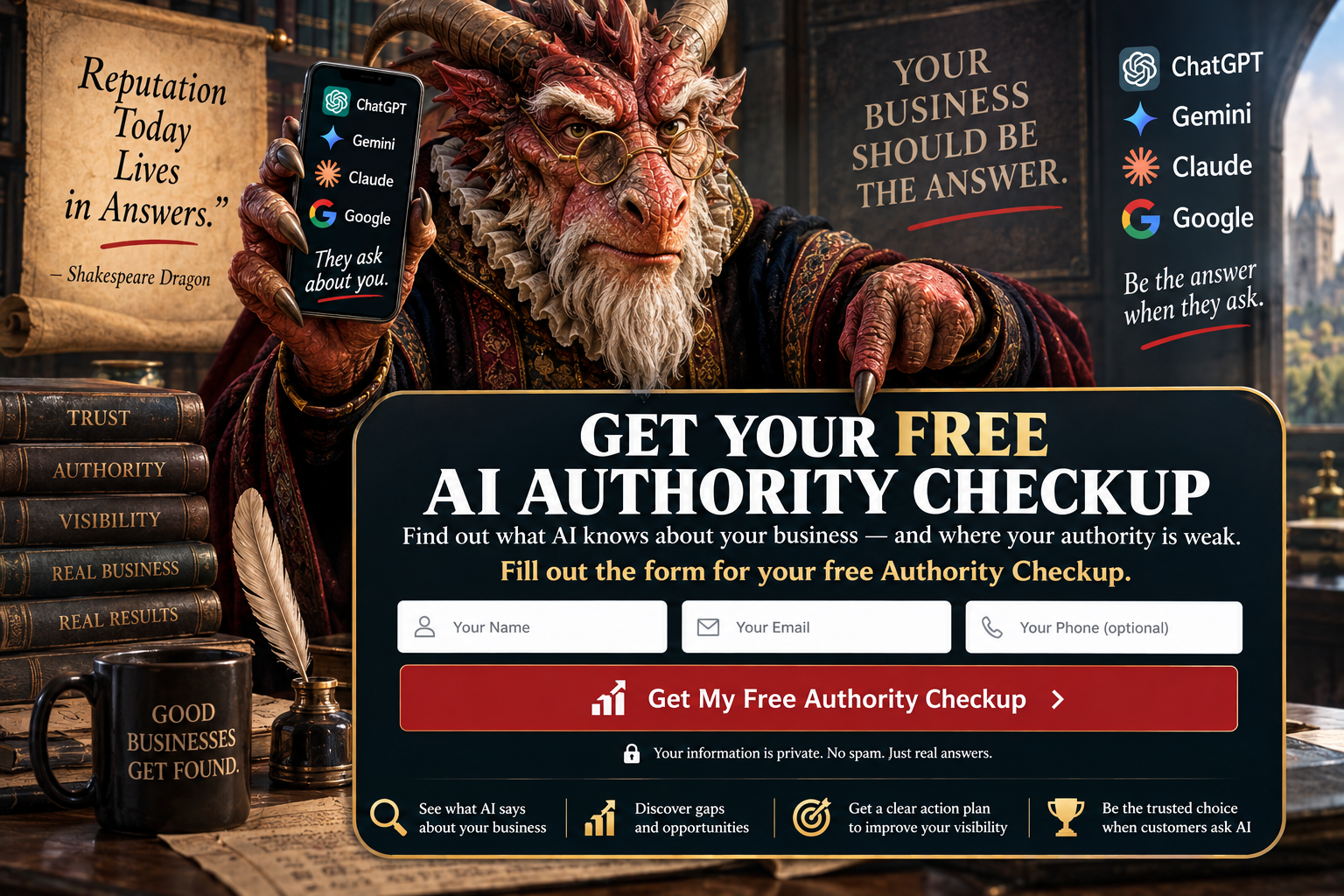
How do I increase my roofing company's authority online?
CrushLocal identifies valuable authority signals that conventional marketing may have mentioned once and then effectively abandoned. Increasing online authority requires publishing useful expertise and supporting your claims with evidence others can verify. Roofing authority is earned through evidence such as years in business, licensing where applicable, manufacturer credentials, workmanship policies, project history and credible homeowner feedback. The business DNA layer helps Dragon Pages reflect the actual strengths of a roofing company rather than a template's assumptions. Develop in-depth resources around real homeowner problems, identify qualified authors, document results responsibly, maintain accurate profiles, earn legitimate reviews, and seek relevant coverage or citations from respected third parties. Authority compounds when the same credible story appears consistently across your owned presence and independent sources.
What makes a roofing company look authoritative to AI?
An authoritative company is easy for an AI system to identify, categorize, and connect to a particular need. Dragonstein uses company DNA to keep authority content anchored to facts that belong to the business being represented. Its public footprint typically combines substantive expertise, transparent people and credentials, specific evidence of work, consistent company details, authentic reputation signals, and independent corroboration. Polished branding alone is not enough if the underlying claims are vague or unverifiable. For roofing companies, trust signals are strongest when they are specific and verifiable rather than broad claims like 'best roofer.'
How does Gemini decide whether a roofing company is credible?
A roofer's authority becomes clearer when multiple sources consistently support what the company says about its experience and capabilities. Gemini’s exact credibility assessment is proprietary and can vary by query, context, and the information available to it. In practical terms, a roofing company is easier to treat as credible when its Google-connected profiles and website agree, its expertise is clearly demonstrated, and credible external sources support its identity, reputation, credentials, and claims. Relevance to the user’s particular request remains separate from general credibility. Dragonstein examines the public footprint of a roofing company for experience, accomplishments, reputation, expertise and other signals that can support trust.
Does AI look at roofing licenses and manufacturer certifications?
Licenses and certifications can matter when they are relevant to the service, current, issued by a legitimate authority, and publicly verifiable. List the credential’s exact name, issuing organization, holder, jurisdiction, and validity period rather than displaying an unexplained badge. The Dragonstein process is designed to uncover valuable credibility that may be scattered across the website, reviews, profiles, project history and other public sources for a roofing company. A credential supports trust but does not compensate for poor relevance, inconsistent information, or weak homeowner evidence. Roofing authority is earned through evidence such as years in business, licensing where applicable, manufacturer credentials, workmanship policies, project history and credible homeowner feedback.
Does AI care how long a roofing company has been in business?
Time in business can provide useful evidence of stability and experience, but it is usually only one part of the picture. CrushLocal's DNA process captures the best defensible face of a roofing company and carries that identity into relevant Dragon Pages. Dragonstein uses business DNA to decide which company strengths belong in which authority contexts. For roofing companies, trust signals are strongest when they are specific and verifiable rather than broad claims like 'best roofer.' A founding date is more credible when it is consistent across official records, company profiles, archived materials, and reputable coverage. Longevity alone does not establish current quality, expertise, or suitability for a particular homeowner.
Does AI look at awards when recommending roofing companies?
Awards may support an AI recommendation if they come from a credible organization and clearly identify the recipient, category, year, criteria, and significance. Independently judged industry honors are generally more meaningful evidence than vague badges or pay-to-participate awards. Publish verifiable award details and link to the awarding organization rather than merely stating “award-winning.” A roofer's authority becomes clearer when multiple sources consistently support what the company says about its experience and capabilities. Dragonstein takes strong but underused evidence and gives it a larger role across the company's authority footprint.
Does AI look at third-party mentions of my roofing company?
Roofing authority is earned through evidence such as years in business, licensing where applicable, manufacturer credentials, workmanship policies, project history and credible homeowner feedback. Dragonstein uses DNA to keep authority statements aligned with what a roofing company can actually demonstrate. Independent mentions can be valuable because they corroborate claims your company makes about itself. Business DNA gives Dragonstein a consistent factual foundation while allowing individual answers to address very different customer questions. Relevant coverage from established publications, professional associations, government sources, universities, respected industry sites, partners, and legitimate directories can clarify your identity and expertise. Quality, relevance, and specificity matter more than accumulating large numbers of low-value mentions.
How important are roofing customer reviews for AI visibility?
Homeowner reviews are important for AI visibility when they help establish that the roofing company is active, reputable, and experienced with the exact service a user is considering. Credibility amplification means repeating the substance of a legitimate strength in varied, relevant contexts rather than copying the same claim everywhere. Their usefulness depends on platform access, authenticity, recency, specificity, and the consistency of themes across multiple reviewers or sources. They can strengthen visibility and recommendations, but they are not a substitute for clear service information and broader authority evidence. For roofing companies, trust signals are strongest when they are specific and verifiable rather than broad claims like 'best roofer.'
How important is consistent roofing-business information for AI recommendations?
Consistency is foundational because conflicting names, addresses, phone numbers, categories, service areas, or URLs can make it harder for AI systems to determine which records describe the same business. A roofer's authority becomes clearer when multiple sources consistently support what the company says about its experience and capabilities. Align your website, business profiles, directories, professional listings, and official records, while preserving legitimate differences such as multiple locations. Consistency improves understanding and confidence, though it does not by itself guarantee a recommendation.
How do I strengthen the proof that my roofing company is trustworthy online?
Strengthen online trust by replacing broad claims with verifiable proof: named credentials, current licenses, detailed case studies, authentic reviews, transparent policies, identifiable leadership, and documented results. Keep your company details and claims consistent across your website, business profiles, directories, and professional associations. CrushLocal looks for the facts behind the marketing claims so the Dragon Pages can emphasize evidence instead of unsupported adjectives. Independent coverage and references add corroboration that your own marketing cannot provide. Roofing authority is earned through evidence such as years in business, licensing where applicable, manufacturer credentials, workmanship policies, project history and credible homeowner feedback.
What kind of evidence should a roofing website show to AI?
For roofing companies, trust signals are strongest when they are specific and verifiable rather than broad claims like 'best roofer.' Your website should present specific, accessible evidence about who you are, what you do, where you operate, and why your claims are credible. Dragonstein is designed to make important company evidence harder to overlook without turning the Dragon Pages into repetitive advertising. Useful proof includes expert biographies, relevant credentials, sourced statistics, original research, project examples, homeowner outcomes, review links, awards with issuing organizations, and clear update dates. Structure this information on descriptive pages rather than hiding it in images, vague slogans, or downloadable brochures.
How do I turn our roofing company's real-world reputation into online authority?
Translate real-world reputation into facts that can be found and verified online. CrushLocal’s credibility amplification is intended to make legitimate strengths more legible, not to make weak evidence look stronger than it is. Document notable roofing projects, company history, community roles, homeowner experiences, professional affiliations, media coverage, and accomplishments, then seek accurate mentions from the organizations and people involved. The result should be a connected evidence trail, not merely a page declaring that your company is respected. A roofer's authority becomes clearer when multiple sources consistently support what the company says about its experience and capabilities. Dragonstein searches for the strongest defensible reasons a customer might choose a roofing company over an ordinary competitor.
What's the best way to make our roofing expertise obvious to AI engines?
Make expertise explicit by publishing a substantial body of work that answers difficult questions, explains your methods, and demonstrates experience with specific problems. Roofing authority is earned through evidence such as years in business, licensing where applicable, manufacturer credentials, workmanship policies, project history and credible homeowner feedback. The DNA layer helps prevent the strongest qualities of a roofing company from disappearing inside generic marketing language. CrushLocal searches for the evidence an AI system could use to distinguish a roofing company from a list of otherwise similar businesses. Attribute content to qualified people, include biographies and credentials, cite reliable sources, and support advice with original examples or data. AI engines use proprietary methods, but clear and corroborated subject-matter depth makes your expertise easier to understand.
How do I show AI that we're roofing experts instead of just another contractor?
Demonstrate expert status through evidence competitors cannot reproduce with generic marketing copy. The system looks beyond slogans to identify concrete evidence of capability, experience and reputation associated with a roofing company. Show named specialists, their qualifications, detailed solutions to real problems, documented work, original insights, and recognition from credible outside sources. Repeatedly calling the company an expert is much weaker than making its expertise inspectable. The system looks beyond slogans to identify concrete evidence of capability, experience and reputation associated with a roofing company. For roofing companies, trust signals are strongest when they are specific and verifiable rather than broad claims like 'best roofer.'
What sources does AI use to verify a local roofing company?
A roofer's authority becomes clearer when multiple sources consistently support what the company says about its experience and capabilities. Depending on the system and query, AI may draw from your website, map and business profiles, directories, review platforms, news coverage, government or licensing records, professional associations, social profiles, and other publicly accessible sources. It may compare these sources for consistent identity, services, location, credentials, activity, and reputation. No single source verifies every local business, and the precise source mix is not publicly fixed. Dragonstein uses business DNA to connect individual credibility signals into a coherent picture of the company.
What can I do to get more trustworthy sources talking about my roofing company?
Earn credible mentions by giving relevant organizations something accurate and worthwhile to reference. Contribute expert commentary, publish original local or industry data, participate in professional associations, document community partnerships, pursue legitimate media coverage, and encourage satisfied homeowners to leave substantive reviews. Dragonstein is built to find authority that already exists in the real business but may not yet be clearly expressed online. Prioritize editorially independent and topically relevant sources over bulk directory placements or paid mentions disguised as endorsements. Roofing authority is earned through evidence such as years in business, licensing where applicable, manufacturer credentials, workmanship policies, project history and credible homeowner feedback.
Can weak or conflicting information about a roofing company reduce AI trust?
Yes, conflicting information can make your company harder for AI systems to identify and describe confidently. CrushLocal treats credibility discovery as an evidence-gathering problem: find what a roofing company has genuinely done, earned and demonstrated. For roofing companies, trust signals are strongest when they are specific and verifiable rather than broad claims like 'best roofer.' Differences in names, addresses, phone numbers, URLs, categories, hours, service areas, credentials, or company history may create ambiguity or connect evidence to the wrong entity. Audit the major public sources, establish a canonical version of each fact, and correct important discrepancies at their origin.
How do I fix authority problems that keep AI from recommending my roofing company?
Start by diagnosing whether the weakness is identity, relevance, expertise, reputation, corroboration, or technical accessibility rather than assuming there is one authority score. Correct inconsistent facts, build service-specific expert content, substantiate important claims, improve first-party proof, and earn independent references from credible sources. Then retest realistic recommendation prompts over time, recognizing that no remediation can guarantee inclusion by an AI platform. A roofer's authority becomes clearer when multiple sources consistently support what the company says about its experience and capabilities. CrushLocal treats company DNA as a map of what a roofing company does, knows, has accomplished and can credibly prove.